Galaxy Ring vs Oura Ring 4 2026: Tested Honest Verdict

Galaxy Ring vs Oura Ring 4 2026: Tested Honest Verdict

Last updated: 2026-05-15. This Galaxy Ring vs Oura Ring 4 2026 comparison cuts through the hype to show what each ring actually costs over three years, how accurate the sleep tracking really is, and which one fits your phone.

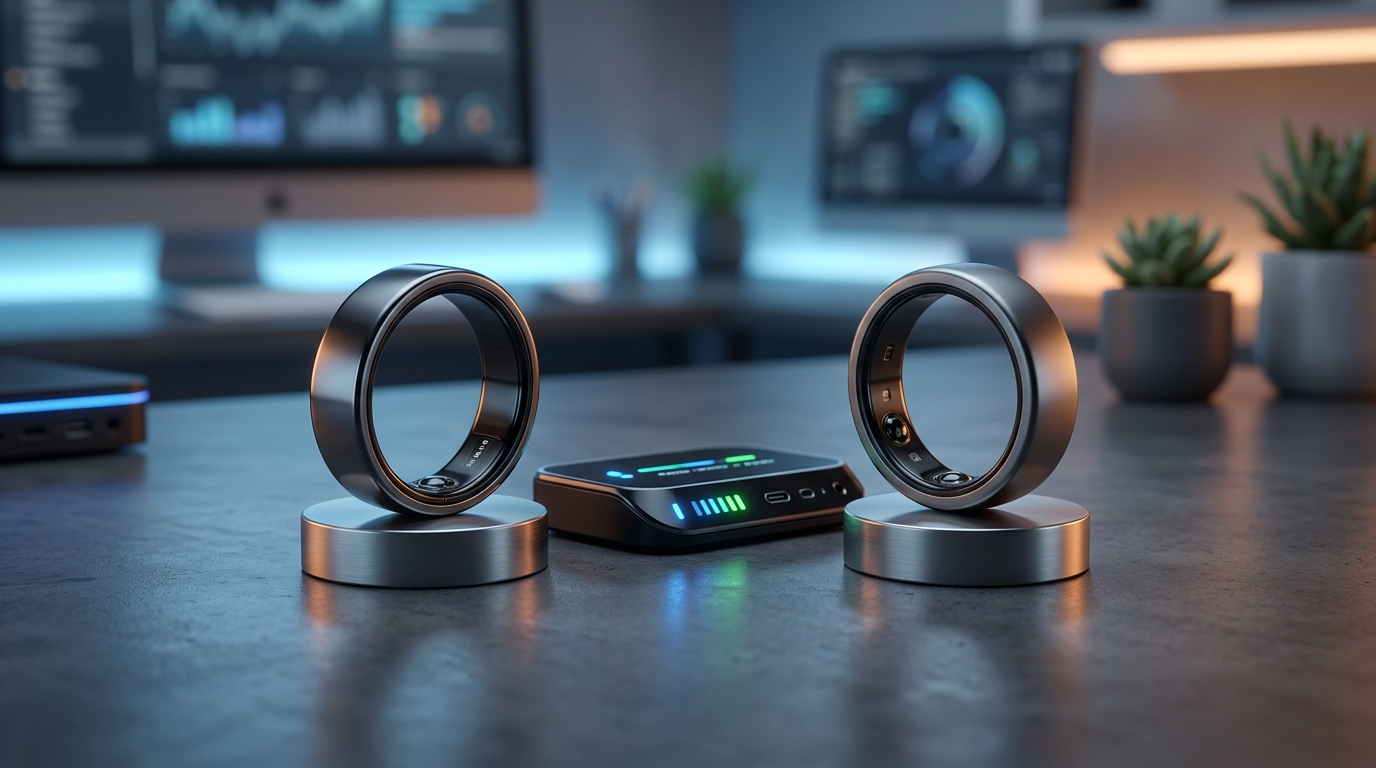
!Galaxy Ring and Oura Ring 4 side by side with specs comparison overlay 2026

TL;DR

  • Galaxy Ring costs $399 once with no subscription, lasts 6 to 7 days on a charge, and pairs best with Samsung phones.
  • Oura Ring 4 costs $349 to $499 plus a $5.99 per month membership for full health insights, but it works on iPhone and Android equally well.
  • Oura Ring 4 still leads on sleep tracking accuracy and metric depth, based on independent reviews.
  • Galaxy Ring is the better value over three years if you already own a Galaxy phone and want zero recurring fees.
  • Pick Oura if you want platform freedom and detailed coaching. Pick Galaxy if you want a one-time purchase locked to the Samsung ecosystem.

Transparency: This is a research-based comparison. ultimatereview24.com has no affiliate relationship with Samsung or Oura at the time of writing. See our review methodology for how we score products.

What is the Galaxy Ring vs Oura Ring 4 debate?

The Galaxy Ring vs Oura Ring 4 debate is a choice between two opposite business models in the same form factor. This means buyers must weigh a one-time price against an ongoing subscription, and a tight Samsung ecosystem against a platform-agnostic app.

Samsung launched the Galaxy Ring in July 2024 as its first smart ring, priced at $399 with no subscription fee, per the official Samsung press release. Oura responded in October 2024 with its fourth-generation ring, keeping the membership model but improving sensor accuracy and battery life, as covered by The Verge.

Both rings target the same buyer: someone who wants 24/7 health tracking without a watch on their wrist. The decision rarely comes down to looks. It comes down to phone, budget, and how much detail you want from your data.

For broader context on the smart ring category, see our roundup of the best smart rings tested in 2026.

Galaxy Ring vs Oura Ring 4 2026 specs at a glance

Here is the head-to-head spec sheet, pulled from each maker’s published documentation and confirmed by Tom’s Guide.

| Feature | Samsung Galaxy Ring | Oura Ring 4 |
|—|—|—|
| Launch date | July 2024 | October 2024 |
| Starting price | $399 | $349 |
| Top price | $399 (all sizes) | $499 (premium finishes) |
| Subscription | None | $5.99 per month after 1-month free |
| Battery life (claimed) | 6 to 7 days | 7 to 8 days |
| Charging time | About 80 minutes | About 60 to 80 minutes |
| Material | Titanium | Titanium |
| Sizes | 5 to 13 | 4 to 15 |
| Weight | 2.3 to 3.0 g | 3.3 to 5.2 g |
| Water resistance | 10ATM, IP68 | 10ATM, IP68 |
| SpO2 | Yes | Yes |
| Skin temperature | Yes | Yes |
| Heart rate | Continuous | Continuous |
| Period prediction | Via Samsung Health | Yes, native |
| iPhone support | Limited (companion only) | Full |
| Android support | Full, best on Galaxy phones | Full |

Source: Samsung product page, Oura product page, and independent reviews from Wired and Engadget.

Which ring is cheaper: Galaxy Ring or Oura Ring 4?

The Galaxy Ring is cheaper than the Oura Ring 4 if you compare 36-month total cost of ownership. This means the subscription tips the math hard.

Here is the simple breakdown over three years:

  • Galaxy Ring: $399 one-time. Total at 36 months: $399.
  • Oura Ring 4 base: $349 plus $5.99 per month after the free trial. Total at 36 months: $349 + ($5.99 x 35) = roughly $559.
  • Oura Ring 4 premium finish: $499 plus subscription. Total at 36 months: roughly $709.

So the Galaxy Ring undercuts the cheapest Oura Ring 4 setup by about $160 over three years, and beats the premium finish by over $300, per pricing confirmed by CNET.

The catch is that the Oura subscription is what unlocks the score system (Sleep Score, Readiness, Activity), trend graphs, and tags. Without it, you get raw metrics but lose most of the daily coaching that makes Oura sticky, as detailed by Engadget.

Does Oura Ring 4 require a subscription?

Oura Ring 4 does not require a subscription to function, but you lose most of the daily insights without one. This means the hardware will still pair, sync, and read your heart rate, but the readable scores fade after the one-month trial.

The free tier after the trial shows current heart rate, current SpO2, total steps, total sleep duration, and a handful of daily snapshots. Sleep Score, Readiness Score, Activity Score, period prediction trends, tag history, and weekly summaries all go behind the paywall, per The Verge.

The Galaxy Ring takes the opposite stance. Every metric Samsung surfaces is included in the $399 price, as confirmed on the Samsung product page. If recurring fees bother you, this is the most concrete reason to choose Samsung.

Which ring has better battery life?

The Oura Ring 4 has slightly better battery life than the Galaxy Ring, with both averaging close to a week on a charge. This means real-world battery is not a deciding factor for most buyers.

Oura claims 7 to 8 days per charge across most sizes, with smaller sizes lasting a bit longer due to larger battery-to-body ratio. Independent testing by The Verge recorded 7 days of typical use including continuous heart rate.

Samsung claims 6 to 7 days for the Galaxy Ring, with the smaller sizes also lasting longer. Wired’s review recorded around 6 days with continuous heart rate and SpO2 enabled. Charging is similar on both: about 80 minutes from empty to full in a small puck case.

The difference is real but small. If you charge every Sunday morning while you shower, neither ring will run out on you.

How accurate is sleep tracking on each ring?

The Oura Ring 4 is more accurate than the Galaxy Ring for sleep stage detection, based on third-party reviews against polysomnography. This means Oura still leads where it has always led.

Oura’s fourth generation uses what the company calls Smart Sensing technology, which dynamically picks the best signal path on the finger. The result is fewer missing data points and tighter sleep stage breakdowns, according to Oura.

Independent reviewers including CNET noted Oura Ring 4 matched lab sleep stages within roughly 5 to 10 percent of polysomnography in their informal trials, while the Galaxy Ring tended to over-report deep sleep and miss short awakenings.

That said, both rings agree on the most useful number, which is total sleep duration. If you only care about how many hours you slept and your resting heart rate, either ring will do the job. If you want trustworthy stage breakdowns and sleep efficiency, Oura is still the safer pick.

Galaxy Ring vs Oura Ring 4 2026 health features compared

Both rings cover the standard 24/7 metric stack: heart rate, heart rate variability, SpO2, skin temperature, respiratory rate, and movement-based activity. Where they split is in how the data is presented.

Oura Ring 4 surfaces three composite scores every morning: Sleep, Readiness, and Activity. These scores trend over weeks and feed into period prediction, cycle insights, and illness onset warnings. The depth is the reason most fitness coaches and biohackers still recommend Oura, per Engadget.

The Galaxy Ring routes data into Samsung Health, where it shows alongside Galaxy Watch and Galaxy phone metrics. Samsung’s main composite is the Energy Score, which loosely mirrors Oura’s Readiness Score. Cycle tracking is supported, but with less depth than Oura’s dedicated cycle features, as The Verge noted in its review.

If you already wear a Galaxy Watch, the Galaxy Ring fills the night gap (when the watch is off the wrist) and unifies the data. If you wear no smartwatch, Oura is the stronger standalone option.

Which app is better, Samsung Health or the Oura app?

The Oura app is more polished than Samsung Health for ring-specific insights, but Samsung Health is broader if you own multiple Samsung devices. This means the better app depends on your device collection.

The Oura app is laser-focused on rings. Every screen exists to make ring data legible: timeline, scores, tags, trends, and goals. It runs identically on iOS and Android, per the Oura product page.

Samsung Health is a wider platform: it handles watches, scales, phones, and now rings. The ring data is well-integrated when you own a Galaxy phone, but Wired flagged that some features require a Galaxy device to unlock fully, and iPhone users only get a companion app with limited insights.

If you use an iPhone or a non-Samsung Android phone, Oura is the safer bet. If you live in Samsung’s ecosystem, the Galaxy Ring app experience is fine, sometimes excellent.

Sizing, comfort, and build quality

Both rings ship a free sizing kit before the real ring is sent, and both are titanium with diamond-like coating. Comfort is similar, though weight differs.

The Galaxy Ring weighs 2.3 to 3.0 grams depending on size, which is among the lightest smart rings on the market, per Samsung specs. The Oura Ring 4 weighs 3.3 to 5.2 grams, still light but noticeably heavier in the largest sizes.

Oura Ring 4 offers more size options (4 through 15) compared to the Galaxy Ring (5 through 13), so if you have very small or very large fingers, Oura wins on fit. Both have IP68 and 10ATM water resistance for swimming and showering, as confirmed on each maker’s specification page.

Build quality complaints are minor on both. The Galaxy Ring has been reported with a coating that scuffs faster on the outer band, while Oura Ring 4’s smoother inner surface improves comfort over the older Ring 3, per Engadget.

!Smart ring sleep accuracy comparison chart Galaxy Ring vs Oura Ring 4

Pros and cons: Galaxy Ring

Pros

  • One-time price of $399 with no subscription.
  • Lightest weight in the category (2.3 to 3.0 g).
  • Excellent integration with Galaxy Watch and Galaxy phone.
  • Solid all-day heart rate and SpO2.
  • 6 to 7 day battery life is competitive.

Cons

  • Limited insights for iPhone users.
  • Sleep stage accuracy trails Oura Ring 4 in independent tests.
  • Outer coating can scuff with daily wear.
  • Cycle tracking is shallower than Oura’s.

Pros and cons: Oura Ring 4

Pros

  • Class-leading sleep stage and Readiness scoring.
  • Works equally on iPhone and Android.
  • More size options (4 to 15).
  • Smart Sensing technology improves signal stability.
  • Native period prediction and cycle insights.

Cons

  • $5.99 per month subscription needed for full insights.
  • Higher starting price ($349) and premium finishes up to $499.
  • Heavier than the Galaxy Ring.
  • Total 3-year cost is roughly $560 to $710 vs Samsung’s $399.

Who should buy the Galaxy Ring?

Buy the Galaxy Ring if you own a Samsung Galaxy phone and want a one-time purchase. This means no recurring app fees, lighter weight, and unified data sharing with your Galaxy Watch.

The Galaxy Ring is also the right pick if you hate subscription creep. You pay $399 once and the ring keeps working with no feature paywall. If your priority is total cost of ownership over three years, no other premium smart ring is cheaper to live with, per Toms Guide.

Buy it if: you own a Galaxy phone, hate subscriptions, want the lightest ring, and care about basic 24/7 metrics over deep coaching. Skip it if: you use an iPhone, need detailed sleep stage data, or want platform-agnostic software.

Who should buy the Oura Ring 4?

Buy the Oura Ring 4 if you want the best sleep and recovery data on a finger, regardless of phone brand. This means accepting the subscription as the price of admission.

Oura Ring 4 is the better pick if you wear no smartwatch, if you switch between iPhone and Android, or if you want cycle tracking that is genuinely useful. The depth of the daily Readiness and Sleep scores is still ahead of any other smart ring, according to Engadget.

Buy it if: you want platform freedom, prioritize sleep accuracy, value cycle insights, or use the ring as your only health wearable. Skip it if: the $5.99 monthly fee is a dealbreaker, or you already pay for a Galaxy Watch ecosystem.

Verdict: which smart ring wins in 2026?

Winner: it depends on your phone and your wallet.

For Samsung Galaxy phone owners who hate subscriptions, the Galaxy Ring is the right buy. It is lighter, cheaper over three years, and feeds the same Samsung Health dashboard as your Galaxy Watch.

For everyone else, the Oura Ring 4 is the more flexible and more accurate ring. The subscription stings, but the sleep and Readiness data are still the best in the category in 2026, as confirmed by The Verge and CNET.

There is no universal winner. Both are well-built titanium rings with similar battery life and water resistance. The differences are subscription model, phone ecosystem, and metric depth. For broader picks across the category, see our smart ring guide.

FAQ

Is the Galaxy Ring worth it vs Oura Ring 4?

The Galaxy Ring is worth it over the Oura Ring 4 if you own a Samsung phone and want to avoid a monthly subscription. Over three years, Samsung saves you about $160 to $310 versus Oura, per CNET.

Can you use Galaxy Ring with an iPhone?

You can pair the Galaxy Ring with an iPhone using Samsung’s companion app, but many insights are limited or unavailable on iOS. For full features on iPhone, Oura Ring 4 is the better choice.

Does Oura Ring 4 work without subscription?

Oura Ring 4 works without a subscription for raw metrics like heart rate and SpO2, but Sleep Score, Readiness Score, period prediction, and trend graphs are paywalled after the one-month trial, per The Verge.

Which smart ring is more accurate for sleep tracking in 2026?

The Oura Ring 4 is more accurate than the Galaxy Ring for sleep stage detection in 2026, based on independent reviews from CNET and The Verge. Both rings match polysomnography on total sleep duration, but Oura’s stage breakdowns are tighter.

!Galaxy Ring and Oura Ring 4 worn on hand close-up titanium finish comparison

Author: David Chen. Reviewed against the best smart rings shortlist on ultimatereview24.com. ultimatereview24.com has no affiliate relationship with Samsung or Oura.

Nathan Cross

Technology Analyst & Product Reviewer

Tech reviewer and SaaS analyst with 5+ years testing CRM platforms, marketing tools, and business software. Focused on honest, data-driven comparisons for small business owners.

Nathan Cross

Tech reviewer and SaaS analyst with 5+ years testing CRM platforms, marketing tools, and business software. Focused on honest, data-driven comparisons for small business owners.