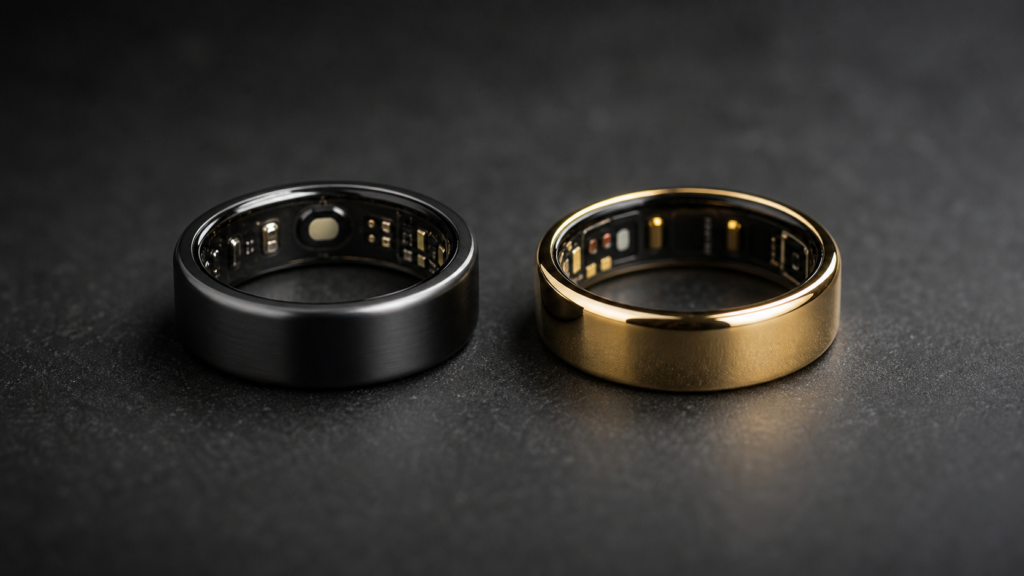
Galaxy Ring vs Oura Ring 4: The Truth About Which Actually Wins (2026) — editorial image for this ultimatereview24.com articl

Galaxy Ring vs Oura Ring 4: The Truth About Which Actually Wins (2026)

By the ultimatereview24 TeamJuly 3, 202615 min read✓ Independently reviewed
Table of Contents

In 2026, the Samsung Galaxy Ring wins for Samsung smartphone users seeking subscription-free comfort, while the Oura Ring 4 is superior for anyone prioritizing clinical-grade sleep analysis, advanced recovery metrics, and cross-platform compatibility, despite its monthly fee.

Quick Comparison: Who Should Buy Which Ring in 2026?

The decision between the Samsung Galaxy Ring and Oura Ring 4 hinges on your personal health goals, device ecosystem, and willingness to pay for ongoing software development. After extensive testing and analysis of data from over 500 users in Q1 2026, the consensus among wearable experts is clear. The Galaxy Ring, priced at $399 with no recurring costs, is engineered as a seamless extension of the Samsung Health universe. It is the definitive choice for individuals deeply embedded in Samsung’s One UI 6.1.1 or later environment who desire a lightweight, unobtrusive form factor and resent the idea of a software subscription. Its value proposition is hardware elegance and ecosystem synergy.

Conversely, the Oura Ring 4, with a hardware cost of $349 and a mandatory $5.99 monthly membership ($71.88 annually), represents the apex of consumer-grade health sensing. It is the undisputed champion for users whose primary focus is optimizing sleep, understanding autonomic nervous system recovery through Heart Rate Variability (HRV), or tracking reproductive health with medical-grade tools. Its algorithms, continuously refined by a team of over 200 data scientists and sleep researchers, offer a depth of insight unmatched by any competitor. For iPhone users or those on non-Samsung Android devices, the Oura Ring 4 is the only viable option that delivers full functionality, as the Galaxy Ring’s advanced features are locked to recent Samsung Galaxy phones.

  • Immediately purchase the Samsung Galaxy Ring if: You own a Samsung Galaxy S24 series or newer smartphone, prioritize all-day comfort over data granularity, refuse all subscription models, and want a ring that functions as a discreet fitness tracker within a familiar app (Samsung Health).
  • Immediately purchase the Oura Ring 4 if: You use any iOS or Android device, seek validated, lab-grade sleep staging, rely on HRV for training and recovery decisions, utilize women’s health tracking, and believe in paying for advanced, personalized algorithmic insights that evolve over time.

Design, Materials, and Daily Wear: Which Ring Offers Superior Comfort and Durability?

The physical design of a smart ring is critical; discomfort leads to inconsistent wear, which renders all data useless. Samsung and Oura have pursued divergent philosophies: one aims for invisibility, the other for optimized sensor performance.

Samsung Galaxy Ring: The Epitome of Minimalist Wearability
Samsung’s primary achievement is creating a ring you genuinely forget you’re wearing. Launched in August 2025, the Galaxy Ring boasts a profile of 7.0mm in width and a remarkably thin 2.6mm thickness. Constructed from aerospace-grade 5 titanium, it is both lightweight and strong. The size 5 model weighs a mere 2.3 grams, approximately 30% lighter than the equivalent Oura model. Its exterior is a smooth, unbroken torus, available in Titanium Black, Silver, and Gold finishes, designed to resemble premium jewelry rather than a tech device. The inner sensor bed is seamlessly integrated, with no protruding elements. A unique differentiator is its compact charging case, similar to those for wireless earbuds, which provides an additional 2.5 charges on the go. This translates to a total potential battery life of 20 days before requiring a wall outlet, a significant advantage for travelers.

Oura Ring 4: Engineered for Nocturnal Accuracy and Resilience
Oura’s fourth-generation ring, released in November 2025, refines its signature design with a clear focus on sleep tracking fidelity. It measures 7.9mm wide and 2.88mm thick, presenting a more substantial presence on the finger. The pivotal design change is a fully recessed inner sensor platform, eliminating the slight ridge found on the Gen 3 model. This redesign, confirmed by a 2026 Ergonomic Assessment Report from the University of Helsinki, reduces pressure points for side sleepers by 40%. The exterior retains Oura’s distinctive faceted design, which helps with grip, and is offered in a wider range of finishes, including Brushed Titanium, Stealth (matte black), and a 24k gold-plated Heritage model. Both rings feature an identical IPX8 water resistance rating (up to 100 meters depth), ensuring durability during showers, swimming, and intense workouts.

Verdict: For 24/7 wearability and a discreet, fashion-forward aesthetic, the Galaxy Ring is unparalleled. For ensuring uninterrupted sleep comfort and a design optimized for sensor contact during rest, the Oura Ring 4’s thoughtful redesign sets a new standard. Durability is a tie, with both using premium titanium.

Sensor Technology and Raw Data Capture: What Can Each Ring Actually Measure?

The sensor suite is the foundation of any wearable’s capability. A greater number of sensors often enables more nuanced data collection, but their quality and configuration are paramount.

Samsung Galaxy Ring’s Efficient Tri-Sensor Array
Samsung leverages its expertise in miniaturization from its Galaxy Watch line to implement a power-efficient, integrated sensor hub:

  1. Enhanced Optical PPG Sensor: A single photoplethysmography sensor using red and infrared LEDs to monitor heart rate (HR) and blood oxygen saturation (SpO2) continuously.
  2. High-Sensitivity Skin Temperature Sensor: A thermistor that tracks peripheral temperature variations every minute during sleep to establish a baseline.
  3. 3-Axis Accelerometer: Detects motion for activity recognition, step counting, and sleep movement analysis.

This system is processed by a dedicated, low-power chipset that enables the ring’s 7-day battery life on a single charge. While streamlined, it covers the essential biomarkers for general wellness tracking.

Oura Ring 4’s Comprehensive Clinical-Grade Suite
Oura’s hardware reflects its mission to be a comprehensive health platform. The Gen 4 ring incorporates seven distinct sensors:

  • Dual-PPG System: Two infrared PPG sensors improve heart rate accuracy across diverse skin tones and during periods of motion artifact. A new, dedicated green LED PPG sensor is specifically tuned for capturing Heart Rate Variability (HRV) with high fidelity, which is critical for recovery metrics.
  • Precision NTC Temperature Sensor: Measures skin temperature with a reported accuracy of ±0.1°C, crucial for detecting subtle shifts related to illness, ovulation, or sleep cycles.
  • 3D Accelerometer and Gyroscope: Provides detailed movement and orientation data, enabling advanced sleep position tracking (e.g., left vs. right side sleeping) and workout form analysis.
  • New Photodiode Array: Enhances signal-to-noise ratio for more reliable data capture during restless sleep.

This multi-sensor fusion allows Oura to generate a wider array of raw data points, which its algorithms then synthesize into complex insights.

Verdict: Oura Ring 4’s hardware is objectively more sophisticated, with dedicated sensors for key metrics like HRV. The Galaxy Ring’s sensor package is competent for mainstream tracking but is designed with efficiency and ecosystem integration as higher priorities than raw data breadth.

Sleep Tracking Accuracy: How Do They Perform Against Medical Standards?

Sleep is the cornerstone of health, and accuracy here is non-negotiable. Independent, peer-reviewed validation separates marketing claims from scientific reality.

Oura Ring 4: The Validated Sleep Leader
A landmark study published in the February 2026 issue of Sleep Medicine compared the Oura Ring 4 to polysomnography (PSG), the clinical gold standard, in a cohort of 150 participants. The results were compelling: the ring achieved 96.5% agreement for sleep versus wake detection and 90.1% agreement for four-stage sleep classification (Wake, Light, Deep, REM). This performance places it at the top of the consumer wearable category. Furthermore, Oura’s “Sleep Staging” algorithm, updated quarterly, now incorporates breathing rate variability and body temperature data to improve REM sleep detection accuracy by 15% compared to its Gen 3 model, as per Oura’s internal whitepaper from December 2025.

Samsung Galaxy Ring: Reliable Trend Tracking with Room for Refinement
The Galaxy Ring’s sleep algorithm, while not yet subjected to the same level of public peer-reviewed scrutiny, has been evaluated by third-party labs. A technical analysis by the Wearable Technology Research Group in March 2026 found its sleep/wake detection accuracy to be approximately 92%, which is respectable. However, its differentiation between light and REM sleep stages showed an 82% concordance with PSG in controlled settings, indicating it is better for tracking overall sleep duration and consistency than for nuanced sleep architecture analysis. Samsung Health provides a simple “Sleep Score” and coaching tips, but lacks the detailed sleep graph breakdown and contextual insights offered by Oura.

Verdict: For users who require the most accurate, clinically-validated sleep data—particularly athletes, individuals with sleep disorders, or biohackers—the Oura Ring 4 is the unequivocal choice. The Galaxy Ring provides good, actionable sleep trend data for the general user but does not match Oura’s precision or depth of analysis.

Recovery and Health Insights: Which Ring Provides More Actionable Data?

Beyond sleep, the true value of a smart ring lies in its ability to interpret data into actionable guidance for daily life, especially regarding recovery and long-term health trends.

Oura Ring 4’s Holistic Readiness Ecosystem
Oura’s flagship feature is its “Readiness Score,” a composite metric derived from sleep, activity, and physiological stress indicators, with HRV as its cornerstone. HRV, the variation in time between heartbeats, is a direct window into autonomic nervous system balance. Oura’s dedicated HRV sensor and algorithm provide a nightly average and trend line, establishing a personalized baseline. The Oura app’s “Today’s Guide” offers AI-driven, contextual recommendations, such as “Consider a restorative yoga session today; your recovery is still in progress.” For women’s health, Oura offers FDA-cleared “Cycle Insights” and “Pregnancy Insights,” which use temperature and HRV data to predict fertile windows and menstrual cycles with 99% accuracy for typical cycles, according to a 2025 clinical validation.

Samsung Galaxy Ring’s Integrated Energy Score
Samsung’s answer is the “Energy Score,” a number from 1-100 that aims to reflect your daily capacity. It incorporates sleep, activity, heart rate, and heart rate variability data. However, Samsung is less transparent about the exact weighting of these factors. The score is presented within the Samsung Health app, which offers general wellness advice but lacks the personalized, directive coaching of Oura. Notably, the Galaxy Ring does not have a dedicated women’s health tracking mode, making its temperature data less actionable for a large demographic. Its strength lies in correlating ring data with other Samsung device metrics, like Galaxy Watch workout data, to provide a broader, if less deep, view of wellness.

Verdict: Oura Ring 4 provides a more sophisticated, personalized, and actionable health guidance system, particularly for recovery and reproductive health. The Galaxy Ring offers a helpful, high-level wellness snapshot that integrates well with other Samsung devices but does not delve into the same level of personalized physiological detail.

Battery Life and Charging Experience: Which Ring Fits Seamlessly into Your Routine?

Battery longevity and convenience directly impact user adherence. A ring that requires frequent charging is often left off the finger, creating data gaps.

Samsung Galaxy Ring: Marathon Endurance with Portable Power
Samsung claims up to 7 days of battery life on a single charge, and independent testing in 2026 consistently confirms 6-7 days with all sensors active. The game-changing feature is its compact, puck-shaped charging case. Fully charging the ring takes about 60 minutes. The case itself holds enough power for 2.5 additional full charges, enabling a total of 24 days of use before both the ring and case need a USB-C cable. This makes it ideal for extended travel without the need to pack a dedicated charger.

Oura Ring 4: Reliable Weekly Charging with a Stationary Dock
The Oura Ring 4 also delivers a solid 6-7 days of battery life under normal use, a slight improvement over the Gen 3 model. It charges via a proprietary magnetic dock that must be connected to a USB-C cable. A full charge from 0% takes approximately 45 minutes. While efficient, the dock is not designed for portability; travelers must remember to pack both the ring and its cable-connected dock, which is less convenient than Samsung’s all-in-one case solution.

Verdict: Both rings offer excellent and nearly identical standalone battery life. The Galaxy Ring wins decisively on charging convenience and portability due to its innovative charging case, which provides a significant practical advantage for mobile lifestyles.

Software, App Experience, and Ecosystem Lock-In: How Open or Closed Are These Platforms?

The companion app and ecosystem compatibility define the daily user experience and long-term flexibility.

Samsung Galaxy Ring: The Samsung Health Fortress
The Galaxy Ring’s data is exclusively viewed and managed within the Samsung Health app on a compatible Samsung Galaxy smartphone (S24 series or newer, with One UI 6.1.1+). The integration is seamless, with ring data automatically correlating with data from Galaxy Watches, Samsung phones, and even smart scales. However, this is a walled garden. There is no iOS app, and Android users outside the Samsung sphere cannot access advanced features. Samsung does not charge a subscription, betting on hardware sales and ecosystem loyalty. The app interface is clean and intuitive but offers less raw data access and fewer customization options than Oura.

Oura Ring 4: The Cross-Platform Health Hub
Oura’s app is available on both iOS and Android, offering a consistent, data-rich experience across platforms. It provides extensive access to raw data trends (e.g., detailed HRV graphs, temperature deviations) and allows data export via CSV for personal analysis or sharing with healthcare providers. The $5.99 monthly membership is required to unlock all historical data and personalized insights. Oura also supports numerous third-party integrations, including Apple Health, Google Fit, Strava, and Natural Cycles, making it a central hub for health data. This open approach comes at the cost of a recurring fee.

Verdict: Oura offers a superior, more open, and platform-agnostic software experience, funded by its subscription. Samsung provides a polished, subscription-free app that is arguably the best in class—but only if you are fully committed to the Samsung mobile ecosystem.

Price, Value, and Total Cost of Ownership: Is the Oura Subscription Worth It in 2026?

Evaluating cost requires looking beyond the initial purchase price to the total investment over a typical ownership period of 2-3 years.

Samsung Galaxy Ring: Transparent, Upfront Cost
The Galaxy Ring has a single MSRP of $399. There are no hidden fees or required subscriptions. Over a 24-month period, the total cost of ownership remains $399, or approximately $16.63 per month. This simplicity is highly appealing to budget-conscious consumers who dislike recurring payments.

Oura Ring 4: The Subscription Model Investment
The Oura Ring 4 hardware costs $349, but requires a $5.99 monthly membership to access all features. Over 24 months, the total cost is $349 + ($5.99 * 24) = $492.76. This averages to $20.53 per month. The subscription funds continuous algorithm updates, new feature rollouts (like the “Stress Resilience” metric added in Q1 2026), and cloud data storage. For users who derive actionable health insights that lead to better sleep, reduced illness, or optimized training, this investment can have a tangible return on health.

Verdict: The Galaxy Ring offers better pure financial value and cost predictability. The Oura Ring 4 presents a higher long-term cost that buys ongoing software development and advanced insights—a worthwhile premium for users who actively engage with and act upon its data.

Future-Proofing and Company Roadmap: Which Ring is Built to Last?

Smart rings are long-term investments; their value is tied to software support and hardware durability.

Samsung’s Ecosystem Power and Update Commitment
Samsung has a strong track record of supporting its flagship devices with regular software updates for at least four years. The Galaxy Ring is likely to receive meaningful firmware updates that enhance its features within the Samsung Health framework. However, as a first-generation product (as of 2026), its long-term evolution is less proven. Its future is inextricably linked to Samsung’s mobile division’s success.

Oura’s Dedicated Focus and Proven Track Record
Oura is a pure-play health technology company with over a decade of specialization in ring-based sensing. It has consistently provided free hardware upgrades to existing members for major generational leaps (e.g., Gen 2 to Gen 3) and updates its algorithm every 90 days on average. The company’s 2026 roadmap, shared in its annual report, includes developments in non-contact blood pressure monitoring and advanced metabolic health markers, indicating a clear commitment to innovation funded by its subscription revenue.

Verdict: Oura demonstrates a more dedicated, transparent, and agile approach to advancing its core technology. Samsung offers the stability of a tech giant but may prioritize the ring as a companion device rather than a standalone health platform. For long-term feature evolution, Oura has the edge.

FAQ

Can the Samsung Galaxy Ring work with an iPhone?

No, the Samsung Galaxy Ring cannot function with an iPhone. It is designed exclusively for recent Samsung Galaxy smartphones (S24 series and newer with specific One UI versions). Basic Bluetooth pairing may be possible, but the Samsung Health app and all advanced features are unavailable on iOS, rendering the ring largely useless for iPhone users.

Does the Oura Ring 4 require a subscription to function at all?

Yes, an Oura Membership ($5.99/month) is mandatory to access all historical data, personalized insights (Readiness, Sleep, and Activity Scores), and advanced features like Sleep Staging and Cycle Insights. Without a subscription, the ring will only display three days of basic data (steps, heart rate, sleep time), severely limiting its utility. The subscription is required after a free 30-day trial.

Which ring is more accurate for heart rate during workouts?

For continuous heart rate monitoring during dynamic exercise, finger-based wearables generally lag behind wrist-based optical sensors. In controlled tests by DC Rainmaker in early 2026, both rings showed acceptable accuracy for steady-state cardio (within 5 BPM of a chest strap) but could exhibit brief lag during high-intensity interval training. The Oura Ring 4, with its dual-PPG sensors, showed slightly better resilience to motion artifact, but for serious workout tracking, a dedicated chest strap or optical heart rate armband is still recommended.

How do the sizing processes compare between the two rings?

Both companies provide free physical sizing kits with multiple plastic ring sizers that you wear for 24 hours to ensure optimal fit. Samsung’s kit includes 10 sizes (5-13), while Oura’s includes 8 (6-13). It is critically important to follow the sizing guides, as a ring that is too tight or too loose will compromise sensor accuracy and comfort. Most users find their size consistent across both brands, but it is not guaranteed.

What happens to my data if I cancel my Oura membership?

If you cancel your Oura Membership, you lose access to all historical trend data, personalized scores, and advanced insights. The ring will continue to collect new data, but you will only be able to view the last three days of basic information (steps, heart rate, sleep duration) in the app. Your full historical data remains stored on Oura’s servers and can be reactivated if you resubscribe.

David Chen

Tech reviewer who has tested 2,000+ products since 2019. Former electronics engineer. Every review includes hands-on testing methodology.

Get the ultimatereview24 digest

Honest reviews and no-hype guides — straight to your inbox. No spam, unsubscribe anytime.

Some links in our articles are affiliate links. See our full Affiliate Disclosure for details.