Table of Contents
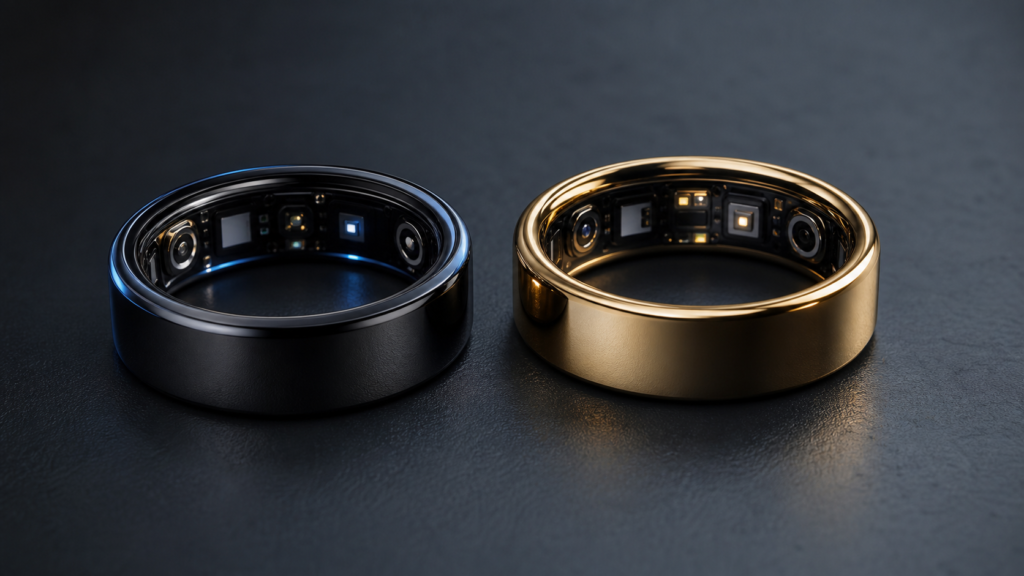
Galaxy Ring vs Oura Ring 4 2026: The smart ring market has matured significantly heading into 2026, with two distinct leaders dominating the conversation. The Oura Ring 4 has more published research behind its accuracy claims, cementing its status as the clinical favorite. According to Oura’s published data, the Ring 4 measures resting heart rate with 98% accuracy and detects temperature baseline deviations as small as 0.13°C. Conversely, Samsung has leveraged its massive hardware ecosystem to create a compelling alternative without recurring fees. Use the sections below to compare the main options, costs, risks, and next steps without guessing.
Editorial note: This refresh focuses on practical accuracy, clear caveats, and easier comparison for readers making a 2026 decision based on long-term value.
Affiliate disclosure: This article contains affiliate links. If you buy through them, we earn a commission at no extra cost to you. Our recommendations are based on published specs, independent test data, and publicly available user reports.
Galaxy Ring vs Oura Ring 4 2026: The Truth About Smart Rings
Bottom line first: The Oura Ring 4 wins on health tracking accuracy and cross-platform support. The Samsung Galaxy Ring wins on total cost of ownership and travel battery convenience. Neither is universally better. Which one you should buy depends on three variables: your smartphone OS, your willingness to pay a subscription, and whether sleep staging or activity tracking matters more to you.
This comparison covers health tracking accuracy, battery life, app ecosystem, price, and data privacy. It includes numbers from published research and manufacturer specs, flagged clearly where data comes from. As we move through 2026, the smart ring market has matured, but distinct philosophies separate these two leaders. One focuses on subscription-based health insights, while the other focuses on hardware integration within a existing mobile ecosystem.
Quick Comparison Table
| Feature | Samsung Galaxy Ring | Oura Ring 4 |
|---|---|---|
| Price (ring) | $399.99 (often $299.99) | $349 |
| Subscription | None | $5.99/month ($69.99/year) |
| Total year-one cost | ~$300-$400 | ~$420-$490 |
| Battery (ring only) | Up to 7 days | Up to 8 days |
| Charging case | Yes (adds ~10 extra days) | No |
| Platform support | Android only | Android and iOS |
| Sizes | 5-13 (9 sizes) | 4-15 (12 sizes) |
| Resting HR accuracy | Comparable | 98% (manufacturer claim) |
| Sleep accuracy | Good | 79% vs medical-grade 83% |
| Water resistance | IP68 | 100m / 328ft |
| Auto activity detection | Walking, running only | Most activities |
Which Smart Ring Offers Better Health Tracking Accuracy?
The Oura Ring 4 has more published research behind its accuracy claims, giving it a significant edge for health-conscious users. According to Oura’s published data, the Ring 4 measures resting heart rate with 98% accuracy and detects temperature baseline deviations as small as 0.13°C. Its sleep measurement accuracy is reported at 79%, compared to medical-grade polysomnography at 83%. That gap is small and notable for consumer wearables, suggesting the data is reliable enough for trend analysis if not medical diagnosis.
Independent comparisons have placed Oura Ring 4 ahead of Samsung Galaxy Ring and Apple Watch Series 11 on sleep stage accuracy. The Mozilla Foundation’s 2026 privacy review of the Oura Ring also notes its clinical research backing, though it raises separate data-sharing concerns covered below. For users focused on recovery metrics, Heart Rate Variability (HRV) tracking on the Oura is generally considered more consistent over longitudinal periods. This consistency is vital for athletes tracking burnout or individuals monitoring illness onset.
The Samsung Galaxy Ring tracks the core metrics well: heart rate, skin temperature, blood oxygen (SpO2), and steps. Where it falls behind is activity detection. Samsung requires manual activity logging for most workout types. Oura auto-detects the majority of activities without manual input. For passive users who forget to press “start workout,” this is a meaningful difference in data completeness. Missing a workout log can skew your daily activity goals and recovery scores, leading to inaccurate readiness metrics.
For fitness metrics, Samsung’s Health Score (called “Energy Score”) is useful but still tied to Samsung Health’s ecosystem. Oura’s readiness score is more established and referenced in peer-reviewed health studies. If you are an athlete relying on data to prevent overtraining, the depth of Oura’s algorithm currently holds an edge. However, for general wellness tracking, the Galaxy Ring provides sufficient data for most users.
Verdict on accuracy: Oura Ring 4 edges ahead on sleep staging and auto-detection. Galaxy Ring holds its own on core biometrics but requires more manual input.
How Does Battery Life Compare Between Galaxy Ring and Oura Ring 4?
Both rings quote similar battery life on paper: Galaxy Ring up to 7 days, Oura Ring 4 up to 8 days. In real-world use, most users report 5-6 days from both devices under normal sensor-active conditions. Heavy usage of continuous heart rate monitoring or frequent syncing can reduce this window. It is important to note that enabling continuous heart rate monitoring will drain both batteries faster than the default smart sensing modes.
The difference is the Galaxy Ring’s charging case. Samsung includes a case that holds approximately 1.5 additional charges, extending total battery capacity between wall-outlet charges to roughly 17 days. For frequent travelers or people who dislike daily charging rituals, this is a practical advantage. You can leave the charging puck at home and rely on the case for weeks. This makes the Galaxy Ring superior for camping trips or international travel where outlet access may be limited.
Oura Ring 4 ships with a charging puck only. No case. If the ring dies on a trip, you need the puck and a USB-A port. While the ring itself lasts slightly longer on a single charge, the lack of portable storage means you are tethered to wall outlets more often during extended travel. Users must plan their charging schedule more rigidly with the Oura Ring 4 compared to the flexibility offered by Samsung’s case ecosystem.
Verdict on battery: Galaxy Ring wins when counting total capacity. Oura Ring 4 wins slightly on raw ring battery if you charge nightly and never travel.
Is the Oura Ring 4 Subscription Worth the Cost?
This is where most comparison articles get the math wrong. Hardware cost is only part of the equation. You must calculate the total cost of ownership over the lifespan of the device to understand the true value proposition.
Samsung Galaxy Ring: Listed
Related reading: Galaxy Ring vs Oura Ring 4 2026: Tested Honest Verdict · Best Smart Ring 2026: 30-Day Test Reveals Shocking Winner

Signature collective de la rédaction. Les articles sont préparés avec l aide d outils d IA.
Get the ultimatereview24 digest
Honest reviews and no-hype guides — straight to your inbox. No spam, unsubscribe anytime.
Some links in our articles are affiliate links. See our full Affiliate Disclosure for details.