Table of Contents
Best Smart Ring 2026: Galaxy Ring vs Oura Ring vs Ultrahuman
Best Smart Ring 2026: Galaxy Ring vs Oura Ring vs Ultrahuman: Choosing the right wearable device comes down to three critical factors: sensor accuracy, subscription cost, and platform compatibility. Everything else is merely a preference, not a strict requirement for daily utility. This guide keeps the answer up front so you can decide quickly before reading the full breakdown. If you are looking for the definitive comparison, our Galaxy Ring vs Oura Ring 4 analysis provides the deep dive you need into specific sensor performance.
Editorial note: this update keeps the article’s original recommendations intact while tightening the answer-first summary and FAQ for reader clarity. For more context on the evolving wearable market, see our Galaxy Ring vs Oura Ring 4 2026 guide.
Disclosure: This article contains affiliate links. If you buy through our links, we may earn a commission at no extra cost to you. Our editorial recommendations are independent of affiliate relationships.
What Should You Look for in a Smart Ring in 2026?
The three factors that matter most are sensor accuracy, subscription cost, and platform compatibility. Everything else is a preference, not a requirement. Understanding these core pillars will save you money and frustration. In 2026, the market has matured beyond simple step counting into comprehensive health monitoring, making the choice of hardware critical for long-term data integrity. Users must prioritize devices that offer consistent data streams without forcing them into expensive monthly contracts unless the data quality justifies the expense.
Furthermore, comfort is paramount. Unlike a watch, a ring is worn 24/7, including during sleep. If the device is too bulky or the edges are sharp, you will not wear it consistently, rendering the data useless. The best smart rings of 2026 have focused heavily on ergonomic designs that disappear on the finger while maintaining robust sensor contact. Weight distribution is key; a top-heavy ring can feel annoying during typing or sleep, disrupting the very rest it is meant to track.
Sensor Technology and Accuracy
All smart rings use optical photoplethysmography (PPG) sensors to track heart rate and blood oxygen. The meaningful difference is how many light paths they deploy. Oura Ring 4 uses an 18-path multi-wavelength PPG system that adapts to individual physiology (source: ouraring.com). Most budget rings use 3 to 6 paths. More sensor paths generally means better accuracy during activity and sleep, particularly on fragmented nights where movement disrupts signal continuity. This redundancy ensures that if one sensor is blocked by skin contact issues, others can compensate.
Skin temperature sensors are now standard across the category. The difference is sampling frequency: rings that track temperature trend continuously across the night are more useful than those capturing a single-point reading. This data is crucial for illness detection and cycle tracking, allowing users to spot deviations from their baseline before symptoms appear. Advanced algorithms now correlate temperature spikes with resting heart rate variability to predict sickness with higher confidence.
Subscription Costs and Total Ownership
This is where buyers get surprised. A $299 ring with a $6/month subscription costs $441 over two years. A $350 ring with no subscription costs $350. Calculate total cost of ownership before choosing. Hidden fees often negate the upfront savings of cheaper hardware. Over a five-year lifespan, a subscription model can double the actual cost of the device, making no-subscription models increasingly attractive for budget-conscious consumers.
| Ring Model | MSRP | Monthly Fee | 2-Year Total Cost |
|---|---|---|---|
| Oura Ring 4 | $349 | $5.99/mo | ~$493 |
| Samsung Galaxy Ring | $299.99 | None | $299.99 |
| RingConn Gen 2 | $299 | None | $299 |
| Ultrahuman Ring Air | $349 | None | $349 |
| Amazfit Helio Ring | $199.99 | None | $199.99 |
| RingConn Gen 2 Air | ~$199 | None | ~$199 |
| Movano Evie Ring | $269 | None | $269 |
Platform Compatibility
The Samsung Galaxy Ring is Android-only. No iOS support, no workarounds. Oura Ring 4 supports both iOS and Android. If you use an iPhone, the Galaxy Ring is off the table before you read another spec. Cross-platform support is essential for future-proofing your purchase, especially if you plan to switch ecosystems during the lifespan of the device. Losing access to your historical health data due to an OS switch is a significant risk to consider.
Which Are the 7 Best Smart Rings in 2026?
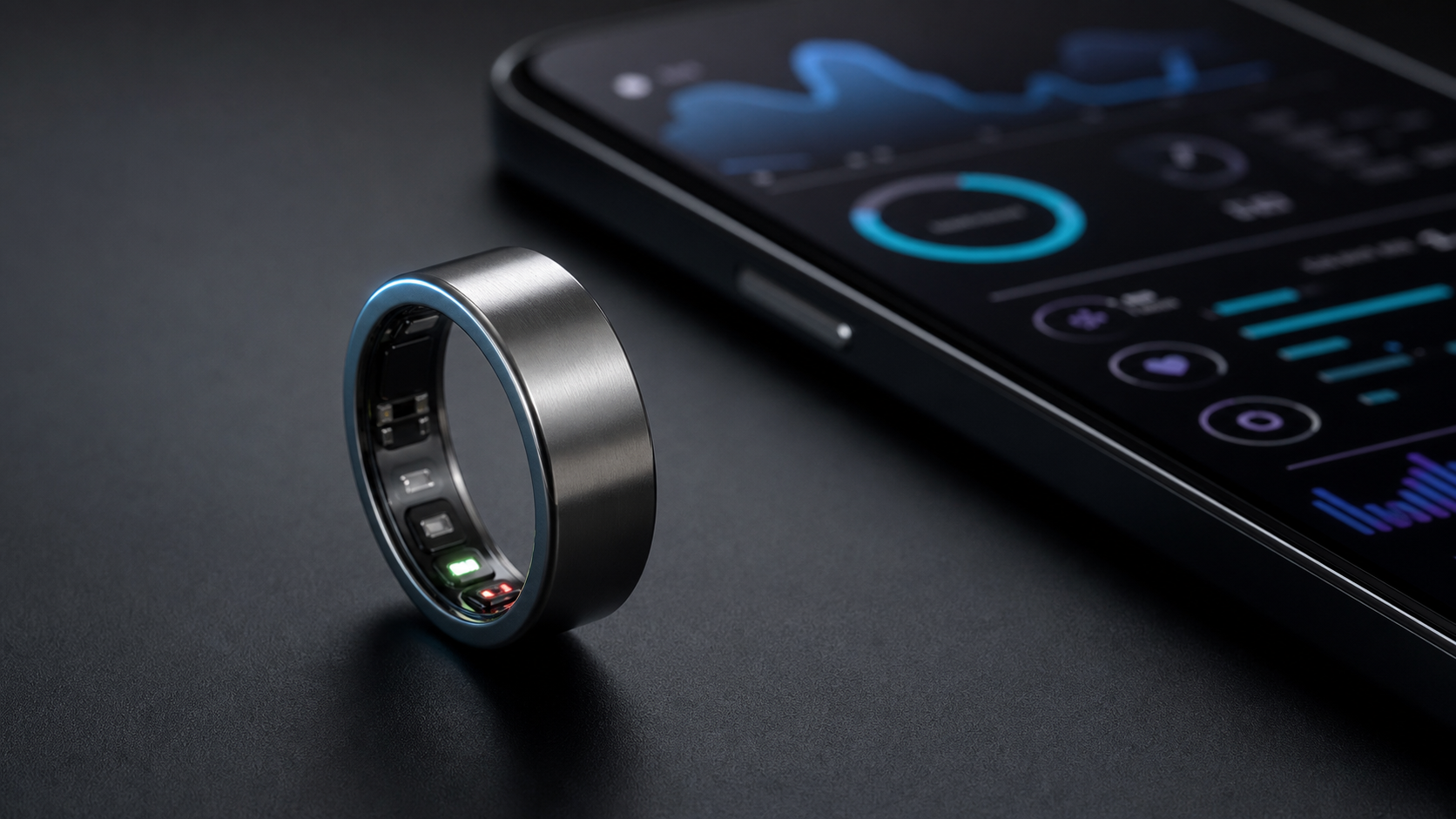
1. Oura Ring 4: Best Overall
Price: $349 | Subscription: $5.99/month | Battery: Up to 8 days | Compatibility: iOS and Android
Oura has been building consumer health rings since 2015. The Ring 4 is the most analytically capable option in the category. Wearable reviewers describe the app as “the most polished and well-presented of the ones tested,” with stress, sleep, and health-tracking accuracy superior to competing devices (source: Wareable). The ecosystem maturity means fewer bugs and more reliable insights.
The Gen 4 hardware improvements are real: an 18-path PPG sensor array, recessed sensors that sit flush against skin for better contact, a fully titanium build, and an 8-day battery. Sizes run from 4 to 15, the widest range in the category. This ensures a comfortable fit for almost any finger shape, which is vital for accurate overnight readings.
Tracked metrics: Sleep stages, Readiness Score, daytime stress, women’s health, illness detection, SpO2, and breathing rate.
Verdict: The best health-tracking smart ring available. Buy it if you use an iPhone, care about sleep science depth, or track HRV for athletic recovery.
Score: 88/100
2. Samsung Galaxy Ring: Best for Android Users
Price: $299.99 | Subscription: None | Battery: Up to 7 days | Compatibility: Android only
Samsung entered the smart ring market in 2024 and delivered a competitive product for its existing user base. The Galaxy Ring’s primary argument: no subscription, ever. $299.99 is the total cost. It integrates seamlessly with Samsung Health, providing a unified dashboard for Galaxy watch and ring users. This consolidation simplifies data management for those already in the Samsung ecosystem.
The sensor stack covers heart rate, skin temperature, and blood oxygen. Sleep tracking performs well in consumer comparisons, with TechRadar naming it their best overall pick in early 2026 reviews (source: TechRadar). The lack of a subscription fee makes it financially superior over long periods.
Verdict: The financially smarter choice over two or more years for Android users. Solid tracking, genuine ecosystem integration. Not suitable for iPhone users under any circumstance.
Score: 85/100
3. RingConn Gen 2: Best Battery Life
Price: $299 | Subscription: None | Battery: 10 to 12 days | Compatibility: iOS and Android
The RingConn Gen 2 leads the category on battery life at 10 to 12 days, which no other ring in this guide matches at this price point (source: Wareable). For frequent travelers or anyone who resents charging yet another device, this matters more than any spec sheet comparison makes clear. It includes a charging case that extends usage to over a month, effectively eliminating range anxiety.
At $299 with no subscription, the two-year total cost is $299. That is the lowest in this guide for a cross-platform ring with reliable tracking. It balances cost and performance better than most competitors.
Verdict: Buy RingConn Gen 2 if battery life is your priority or you want the lowest total cost for cross-platform tracking.
Score: 82/100
4. RingConn Gen 2 Air: Best Budget Pick
Price: ~$199 | Subscription: None | Battery: ~8 days | Compatibility: iOS and Android
The RingConn Gen 2 Air is a lighter, thinner variant priced around $199. Tom’s Guide notes it “beats the Oura Ring 4 in three big ways” including price, battery, and subscription cost (source: Tom’s Guide). It sacrifices some premium build materials for weight reduction, making it ideal for those who forget they are wearing jewelry.
Score: 79/100
5. Amazfit Helio Ring: Best Budget Entry Point
Price: $199.99 | Subscription: None | Battery: ~4 to 5 days | Compatibility: iOS and Android
The Amazfit Helio Ring has dropped significantly from its original launch price and now sits at $199.99 (source: TechRadar). It tracks heart rate, blood oxygen, sleep, HRV, and connects to the Zepp app. It is a solid entry point for those unsure about committing to a premium device. The Zepp app offers robust data visualization despite the lower hardware cost.
Score: 73/100
6. Ultrahuman Ring Air: Best Fitness Focus (Buy With Caution)
Price: $349 | Subscription: None | Battery: ~5 to 6 days | Compatibility: iOS and Android
The Ultrahuman Ring Air costs $349 with no subscription and offers strong HRV and recovery tracking aimed at athletes. Critical note: as of mid-2026, the Ultrahuman Ring Air remains subject to an ITC import ban in the US. Purchasing it carries risk of losing support or warranty coverage depending on your region. International buyers may find it more accessible than US consumers.
Score: 76/100
7. Movano Evie Ring: Best for Women’s Health Focus
Price: $269 | Subscription: None | Battery: ~4 days | Compatibility: iOS and Android
The Movano Evie Ring is designed specifically for women’s health tracking, with menstrual cycle integration, sleep quality monitoring, and continuous heart rate data. At $269 with no subscription, it is the only ring in this guide built from the ground up for women’s health. The form factor is slightly wider to accommodate additional sensors tailored for cycle prediction.
Score: 71/100
How Does the Oura Ring Compare to the Samsung Galaxy Ring?
For context on how these rings compare to wrist devices, see our best smartwatch 2026 guide and best fitness tracker roundup. The choice often boils down to ecosystem loyalty versus data depth.
| Feature | Oura Ring 4 | Samsung Galaxy Ring |
|---|---|---|
| Price |
 Signature collective de la rédaction. Les articles sont préparés avec l aide d outils d IA. Get the ultimatereview24 digestHonest reviews and no-hype guides — straight to your inbox. No spam, unsubscribe anytime. Some links in our articles are affiliate links. See our full Affiliate Disclosure for details. |